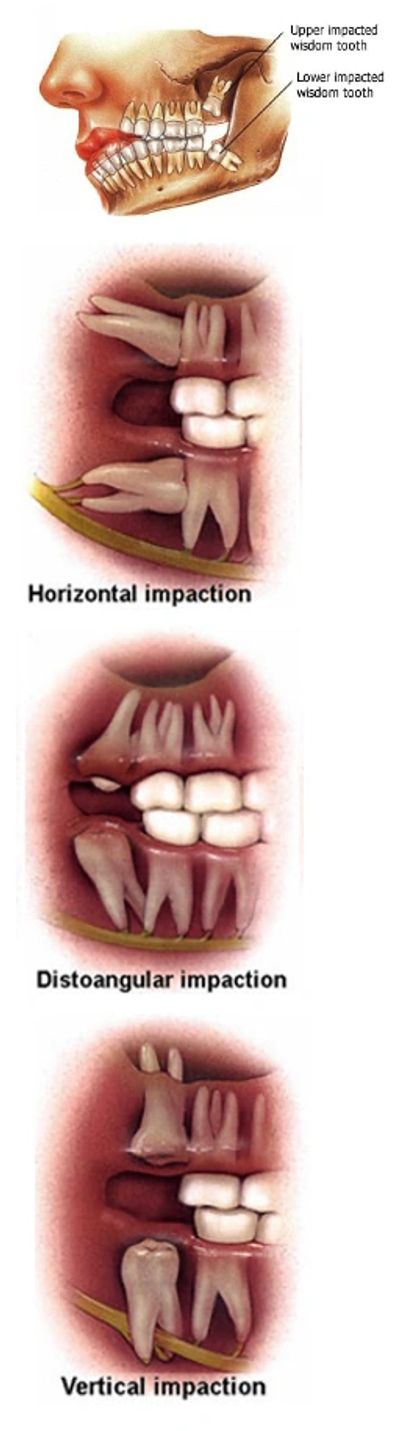
The wisdom tooth removal surgery for impacted wisdom teeth should take about 20-45 minutes. With anesthesia, you shouldn’t feel any pain or discomfort. Depending on what type of anesthesia is used, you may be asleep or conscious during the surgery at an oral surgeon in Mumbai.
These are the steps for a typical procedure:
Sedation or General Anesthesia: Many people choose conscious sedation or general anesthesia (being put into a sleepy state where pain signals are blocked) so they have little or no memory of having their wisdom teeth extracted. If you are receiving nitrous oxide (laughing gas), you will be fitted with a small mask to inhale the sedative, allowing you to stay awake yet relaxed. If intravenous (IV) sedation is chosen, the assistant will place a needle in your arm to administer a sedative throughout the wisdom tooth removal procedure. This is generally considered the most comfortable option, as you drift in and out of consciousness and are unlikely to remember the procedure afterward.
Local Anesthesia: Your oral surgeon in Mumbai will start by numbing the wisdom teeth and their surrounding tissues with a local anesthetic.
Tissue removal: The surgeon removes any gum tissue covering the area where the impacted wisdom tooth is located to access the tooth.
Bone removal: An impacted wisdom tooth could be fully or partially covered with bone. In this case, a high-speed handpiece is used to drill through and remove the bone covering the tooth.
Loosening and sectioning of the tooth: Once the impacted wisdom teeth are visible, various surgical instruments are used to gently loosen them from the connective tissue in the tooth's socket. The surgeon may cut the tooth into sections to allow for easier removal.
Tooth removal: Once the wisdom tooth is loose or has been completely sectioned, it is ready for removal. The surgeon will use specially designed surgical instruments to fully extract the tooth.
Stitches: After the wisdom teeth are removed, the surgeon may add stitches to close the area. This is sometimes necessary when impacted wisdom teeth are extracted or when the practitioner feels the patient will heal better with stitches in place. These stitches may either be dissolvable, which come out on their own after two to three weeks, or those that need to be removed by the surgeon after a certain period of time.
Pressure Pack: Once the procedure is complete, the surgeon will provide gauze for you to bite down on to help blood clot in the area.
Recovery: If the wisdom tooth removal is done under local anesthesia, you will remain fully awake and not feel any pain, allowing you to go home immediately after receiving post-op care instructions. In the case of sedation or general anesthesia, you will be taken to a recovery room for monitoring. Once a specialist determines that you are stable and breathing normally, you’ll be cleared to go home, typically spending 3-4 hours in the recovery room. Right after surgery, you may feel mild effects of the anesthesia, such as nausea, dizziness, and shivering.